If you have been dealing with a stubborn tendon or soft-tissue injury that does not seem to be improving, you may have heard of shockwave therapy. Despite its name, shockwave therapy does not involve electrical shocks. Instead, it uses acoustic (sound) waves to deliver mechanical energy to a targeted area of the body.
Shockwave therapy, also known as extracorporeal shockwave therapy (ESWT), is a non-invasive treatment that may help reduce pain and support the rehabilitation process for certain musculoskeletal conditions. Research has found benefits for a number of conditions, including plantar fasciitis and several types of tendinopathy.
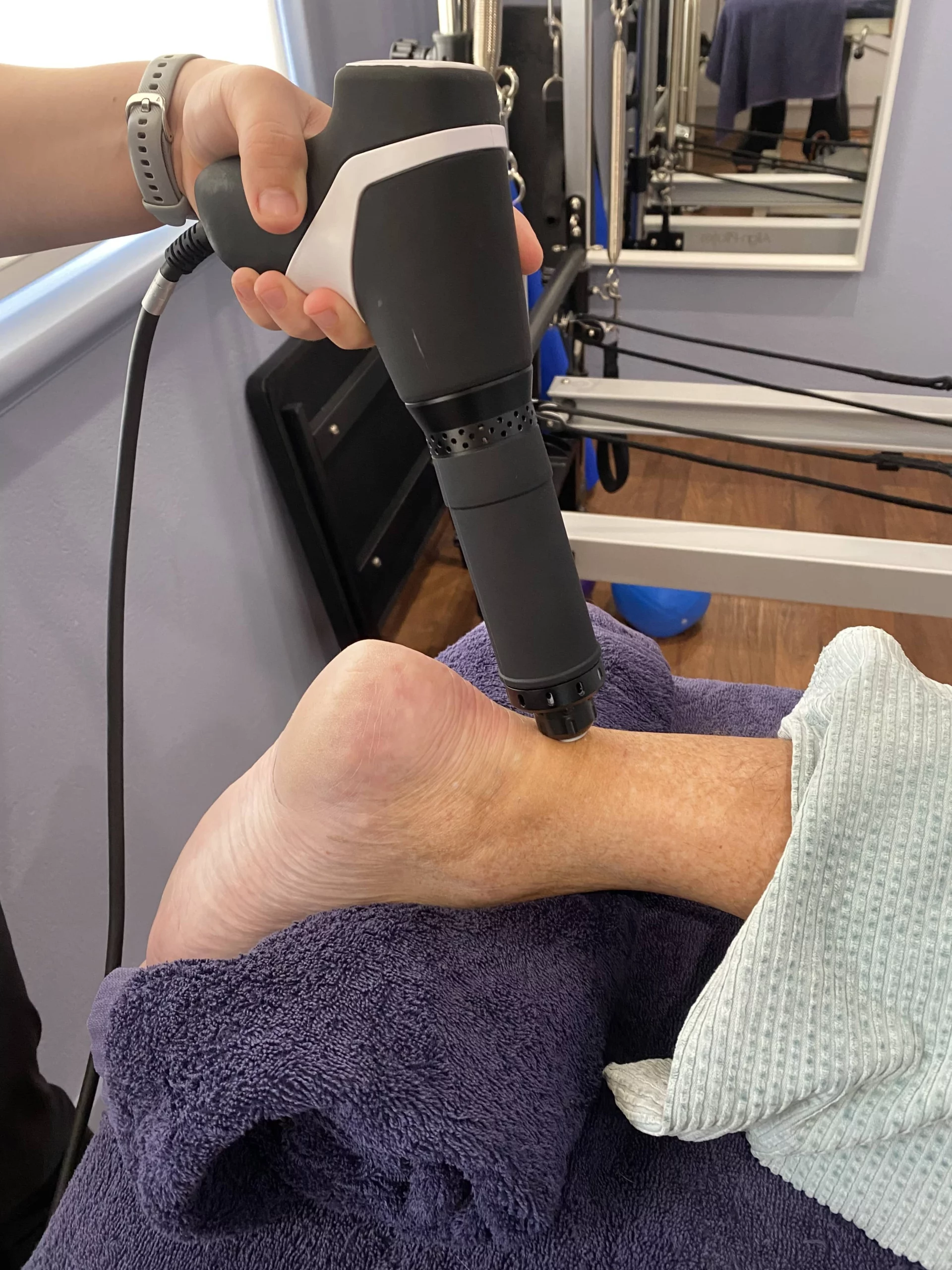
What Is Shockwave Therapy?
Shockwave therapy delivers acoustic waves through the skin and into the targeted area. The treatment is mechanical rather than electrical, and you will typically hear a repetitive clicking or tapping sound during the treatment.
It is used to influence the local tissue environment and pain response to help stimulate biological processes involved in tissue repair.
Importantly, shockwave therapy is generally used as part of an overall rehabilitation plan, rather than as a stand-alone solution. Your physiotherapist may combine it with exercises, activity modification, mobility work, strengthening, and other treatments depending on your individual needs.
What Is Shockwave Therapy Used For?
Shockwave therapy is most commonly considered for persistent musculoskeletal conditions, particularly when symptoms have not improved as expected with more traditional rehabilitation.
Depending on your assessment, shockwave therapy may be used for conditions such as:
Other selected tendon and soft-tissue conditions
- Plantar fasciitis / plantar heel pain
- Achilles tendinopathy
- Patellar tendinopathy (jumper’s knee)
- Tennis elbow / lateral elbow tendinopathy
- Rotator cuff-related shoulder pain and tendinopathy
- Gluteal tendinopathy / greater trochanteric pain syndrome
- Proximal hamstring tendinopathy
What Can You Expect During Treatment?
Before treatment begins, your physiotherapist will assess your symptoms and determine whether shockwave therapy is appropriate for you.
During treatment, a small amount of gel is usually applied to the skin. A handheld applicator is then placed over the affected area and delivers the acoustic waves.
You may feel some discomfort during treatment, particularly when the applicator is positioned over a sensitive area. The intensity can usually be adjusted based on your comfort level.
A treatment session is generally relatively short. The number of sessions varies depending on the condition, your symptoms, and your response to treatment. Many treatment programs involve several sessions spaced approximately one week apart, but your physiotherapist will recommend a schedule appropriate for you.
What Happens After Treatment?
It is normal for the treated area to feel somewhat sore or sensitive after shockwave therapy. You may also experience temporary redness, swelling, bruising, numbness, or an increase in pain. These effects are generally short-lived.
Your physiotherapist will provide specific advice based on the area being treated. In many cases, patients are advised to reduce high-impact or strenuous activity for approximately 24–48 hours while continuing with their prescribed rehabilitation program.
It is important to remember that improvement is not always immediate. Shockwave therapy is intended to support the rehabilitation process, and changes in pain and function may develop over time.
Benefits of Shockwave Therapy
There are several reasons shockwave therapy may be considered as part of a rehabilitation program:
- Non-invasive: Shockwave therapy is delivered through the skin and does not require surgery or injections.
- Short treatment sessions: Individual treatment sessions are generally relatively brief.
- Can be combined with rehabilitation: Shockwave therapy can be incorporated alongside a personalized exercise and rehabilitation program.
- Evidence-supported for several conditions: Research supports its use for a number of common musculoskeletal conditions, particularly plantar fasciitis and certain tendinopathies.
Frequently Asked Questions (FAQ’s)
Does shockwave therapy hurt?
Shockwave therapy can be uncomfortable, particularly when treating a sensitive area. However, the intensity of the treatment can generally be adjusted to make it more tolerable. Some soreness after treatment is also normal.
How many treatments will I need?
The number of treatments varies depending on your condition and how you respond. A course may involve several sessions, often spaced about a week apart. Your physiotherapist will discuss the recommended treatment schedule with you.
How quickly will I notice results?
Some people notice changes relatively early, while others require more time. Shockwave therapy is not necessarily an immediate pain-relief treatment, and improvement can continue after the treatment sessions have finished.
Your physiotherapist will monitor your symptoms and function throughout the treatment process to determine whether you are responding.
Is shockwave therapy safe?
Shockwave therapy is generally considered a safe, non-invasive treatment when appropriately administered. Temporary soreness, redness, swelling, bruising, or altered sensation can occur following treatment. More serious complications, such as tendon or soft-tissue damage, are considered rare.
Can I exercise after shockwave therapy?
You can generally continue normal daily activities, but strenuous or high-impact activities may need to be modified for a short period following treatment. Your physiotherapist will provide specific recommendations based on your condition and treatment area.
Is shockwave therapy a replacement for physiotherapy exercises?
No. Shockwave therapy is best thought of as one tool within a broader rehabilitation program. Depending on your condition, exercises and progressive strengthening may be an important part of helping you return to your normal activities.
Is shockwave therapy the same as ultrasound therapy?
No. Although both treatments use waves, they are different technologies. Shockwave therapy uses mechanical acoustic waves delivered at higher intensities than conventional therapeutic ultrasound and is used for different clinical purposes
Is Shockwave Therapy Right for You?
If you have a persistent tendon or soft-tissue problem that has not improved as expected, shockwave therapy may be one treatment option worth discussing with your physiotherapist.
The first step is a thorough assessment to determine what is causing your symptoms and whether shockwave therapy is appropriate for your specific condition. If it is, your physiotherapist can explain what to expect and how it can fit into your overall rehabilitation plan.
If you are wondering whether shockwave therapy could be appropriate for your injury, book an assessment with our physiotherapy team at PhysioLinks Rehab to discuss your symptoms and treatment options. Visit one of our convenient Burlington locations for professional assessment and personalized treatment:


